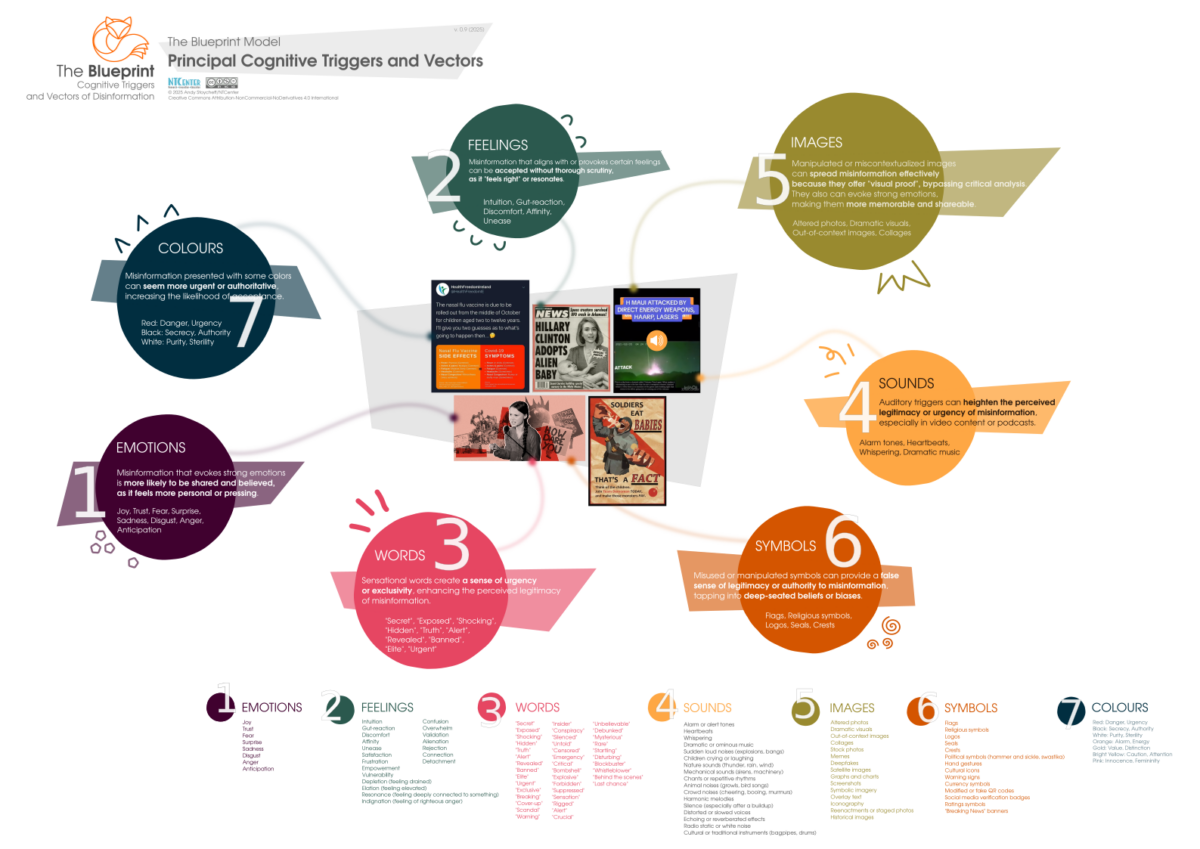
Analysts and educators can use the model as a framework to guide a deconstruction process, where a stimulus is broken down into distinct elements — triggers and vectors — and these elements are further investigated for their properties and characteristics. Learning and understanding how these elements interact and play together in our minds is key to understanding the cognitive implications of disinformation, false claims, conspiracy theories, propaganda and information warfare. The Blueprint is also a powerful framework for teaching information and media literacy. In its current form, The Blueprint is intended for professionals, but numerous presentations and trainings based on it have already been delivered to audiences of adult 16+ learners in schools, universities, workshops and conferences.
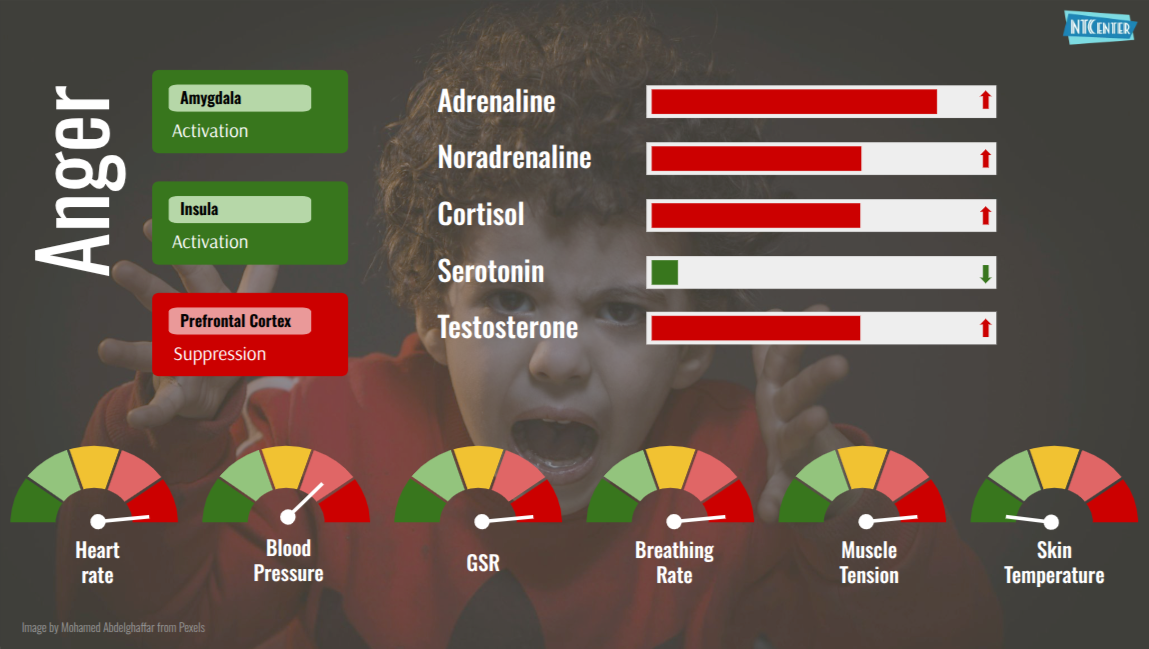
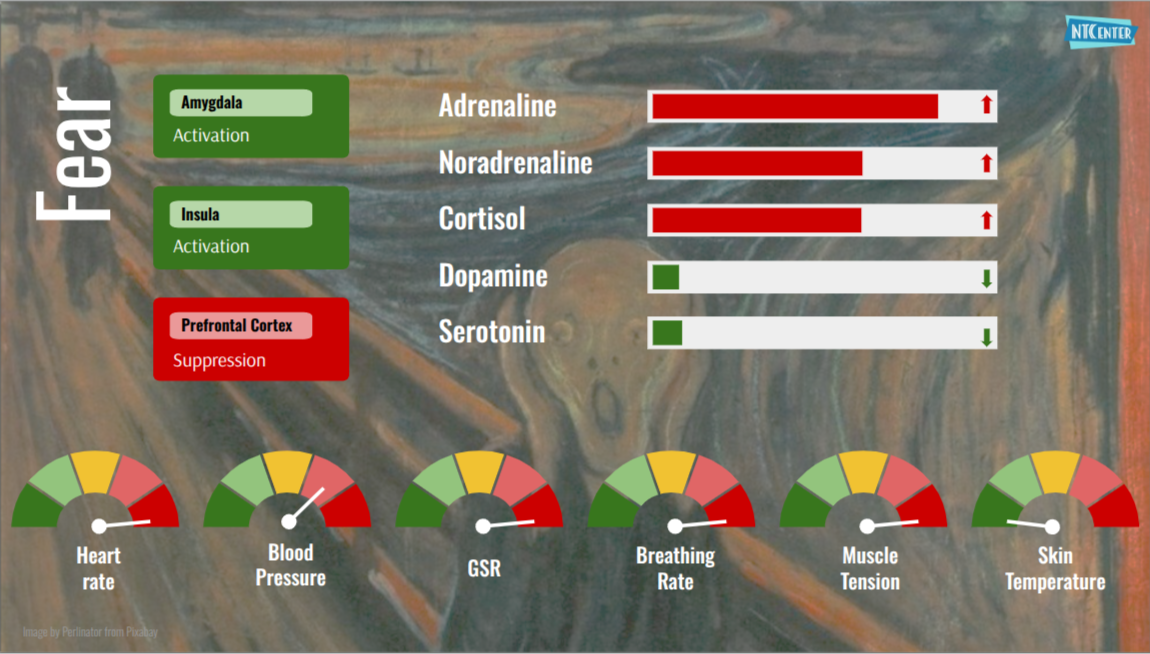
One of the primary mechanisms used in disinformation campaigns lies in the attempt to trigger strong feelings, often fear, disgust, or indignation. These emotional states are known to lead to impulsive actions. But why? Once a disturbing stimulus that triggers fear and anger is detected in a digital environment, it is processed by the senses — because of the medium, this is usually visual and auditory. Trigger words, colours, masterfully used symbols, combined with sound, send signals along the neural pathways in the brain that reach the limbic system (up to 15 ms). Once there, the thalamus – a sensory switchboard of sorts – identifies the signals as potentially dangerous and signals the amygdala (5-15 ms) before even allowing the signal to reach (200-300 ms) and be processed in the pre-frontal cortex. The amygdala immediately issues a distress signal, prompting (20-50 ms) the hypothalamus, the main hormonal control hub, to command the release of adrenaline (time to initial effect – 5-15 secs), noradrenaline (5-30 secs), testosterone (5-10 mins) and cortisol (10-20 mins).
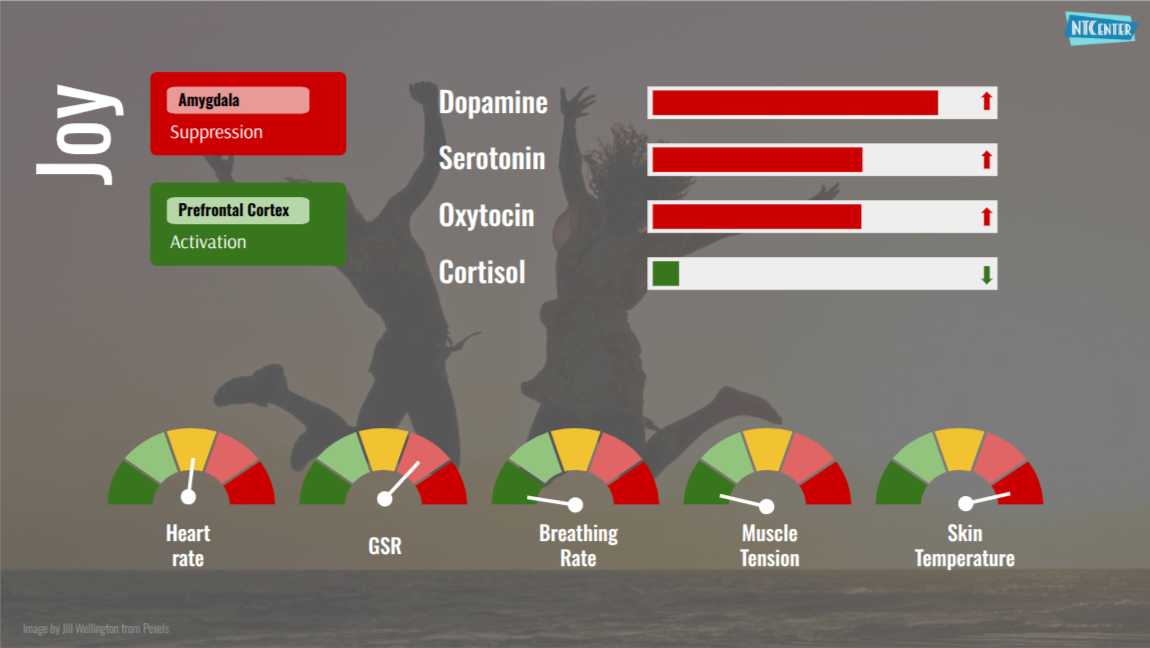
In an ever-going battle of control between the rational and the emotional parts of the brain, the emotions take over, and the pre-frontal cortex function, where decisions are carefully weighed and rationality prevails, is temporarily inhibited. The amygdala and the insula, the part of the brain that modulates emotional response, are in an activated state. The hormones in our bloodstream trigger a physiological reaction – our muscles tense and get filled with blood, our hands sweat, our heartbeat and blood pressure increase, we prepare for danger – the fight-or-flight reflex is activated. It is only around this time, about 300ms after the initial stimulus, that the rational part of our brain identifies that the original stimulus and the reaction to it correspond to the emotions of fear and anger.