by Larysa Nazarenko, CSO Segalor, Ukraine.
Today’s information space is governed not just through policy and legislation, but through
socio-technical infrastructures and human-AI collaboration. Algorithms actively construct and manage human digital identity through profiling, behavioural prediction, automated categorisation, content curation, ranking, and emotional targeting.
Disinformation, in turn, does not appear as isolated false content but moves and mutates
through these same socio-technical infrastructure, exploiting dark patterns and AI-driven personalisation that blur the boundary between user choice and manipulation.
The information ecosystem has changed. So have the tools meant to fight disinformation. Within the EU framework, combating disinformation relies on two distinct but interconnected types of tools. While legislative tools set and enforce boundaries, nonlegislative ones contribute by supporting users’ capacity to engage with information more critically.
As EU legislative tools increasingly rely on platform-led algorithmic systems to detect, moderate, and remove illegal or harmful content, combined with the growing role AI systems play in shaping what becomes visible, believable, and influential online, media and informational literacy (MIL) needs to be adaptive, accessible and future-oriented.
Against this backdrop, the Scanarix Media Game is deliberately designed to respond to these dynamics, drawing on relevant international and EU policy and legal frameworks, critical AI scholarship, empirical findings across EU, international contexts on countering disinformation, digital democracy, MIL, and the human rights agenda, rooted in everyday realities.
Scanarix Media Game enables players to engage with the full spectrum of contemporary
media challenges: AI, visibility mechanisms, narrative framing, and the political economy of
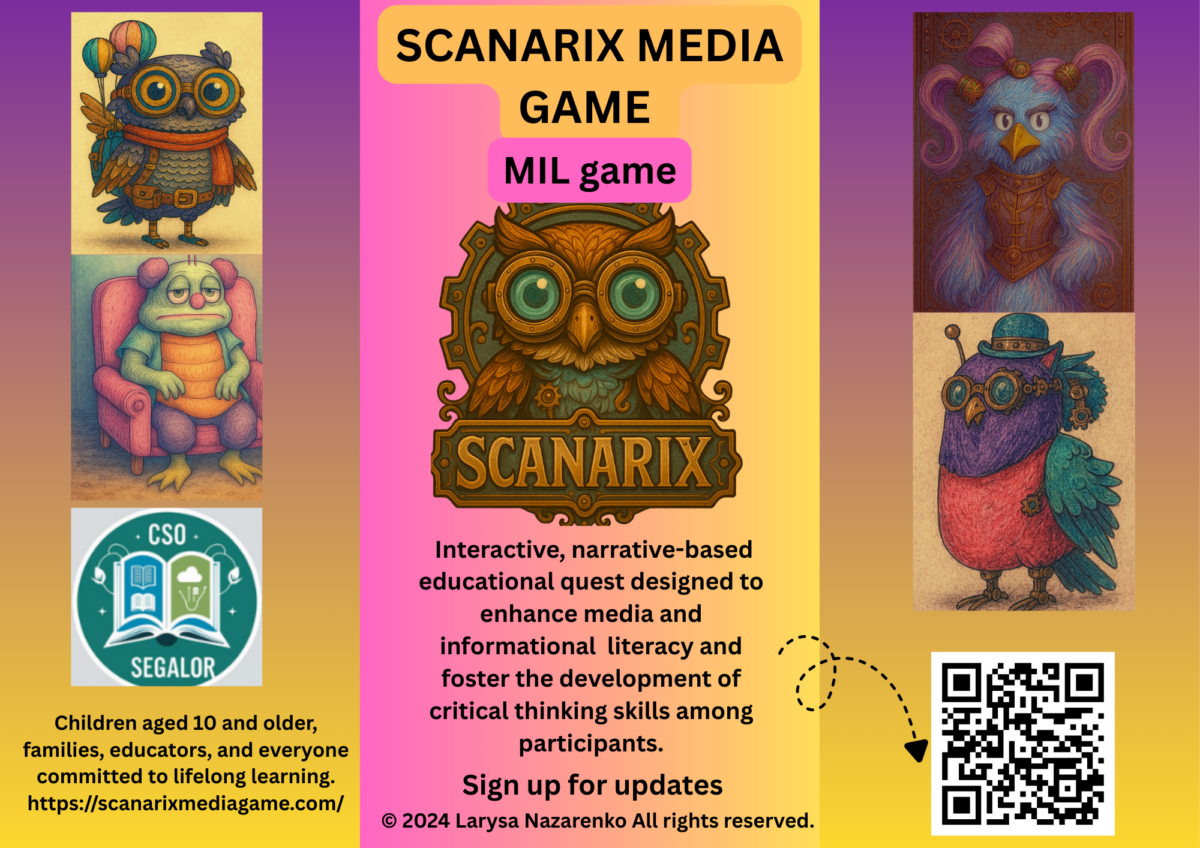
attention. It is a multilingual serious MIL game for players aged 10 and up, including intergenerational groups, developed and implemented by me, Larysa Nazarenko in collaboration with the Ukrainian CSO Segalor.
Designed for everyone, students, families, educators, and lifelong learners, the game uses
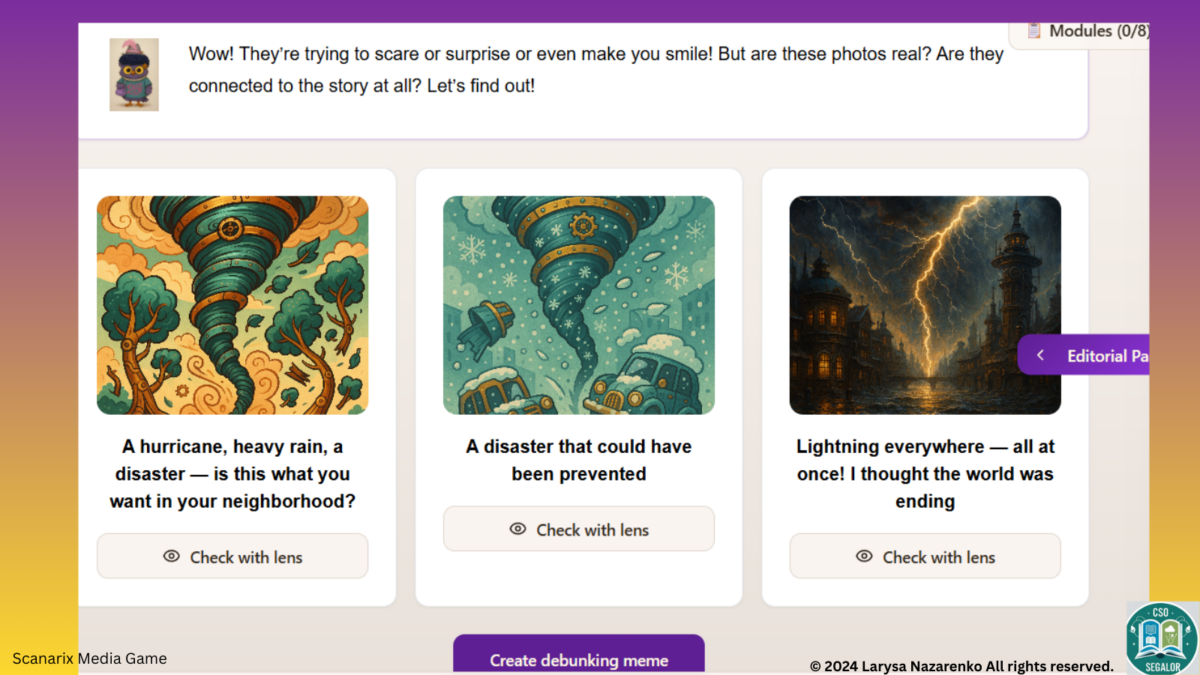
scenario-driven narrative-based gameplay, collaborative tasks, and structured reflection to
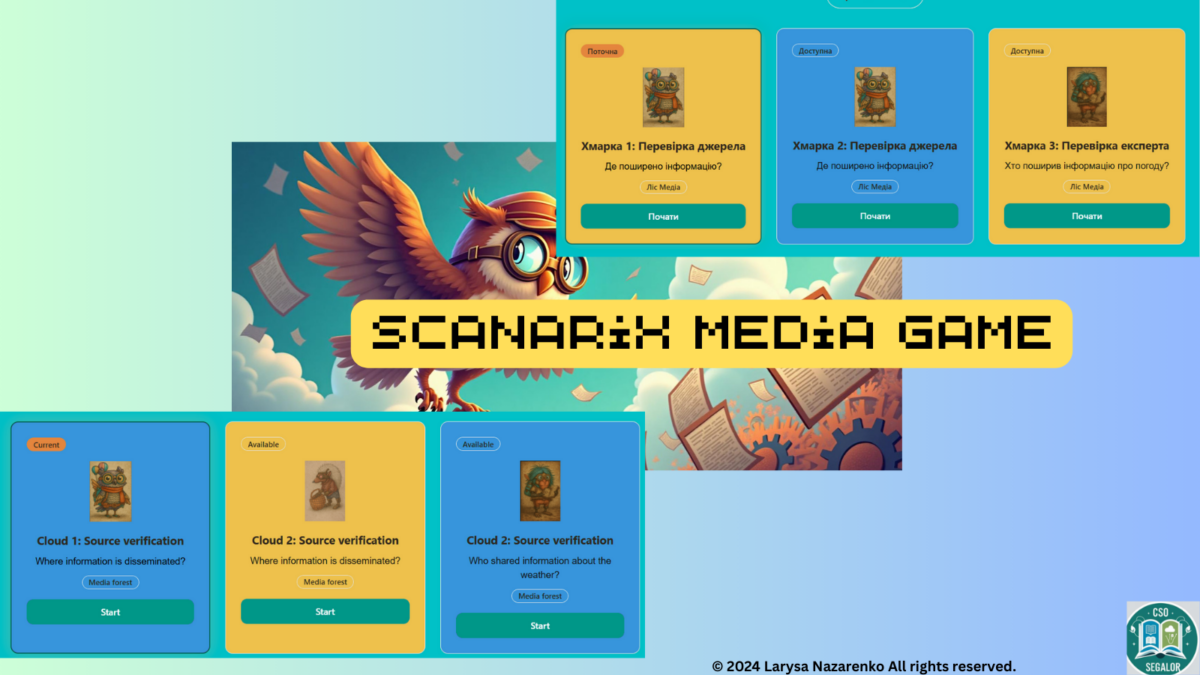
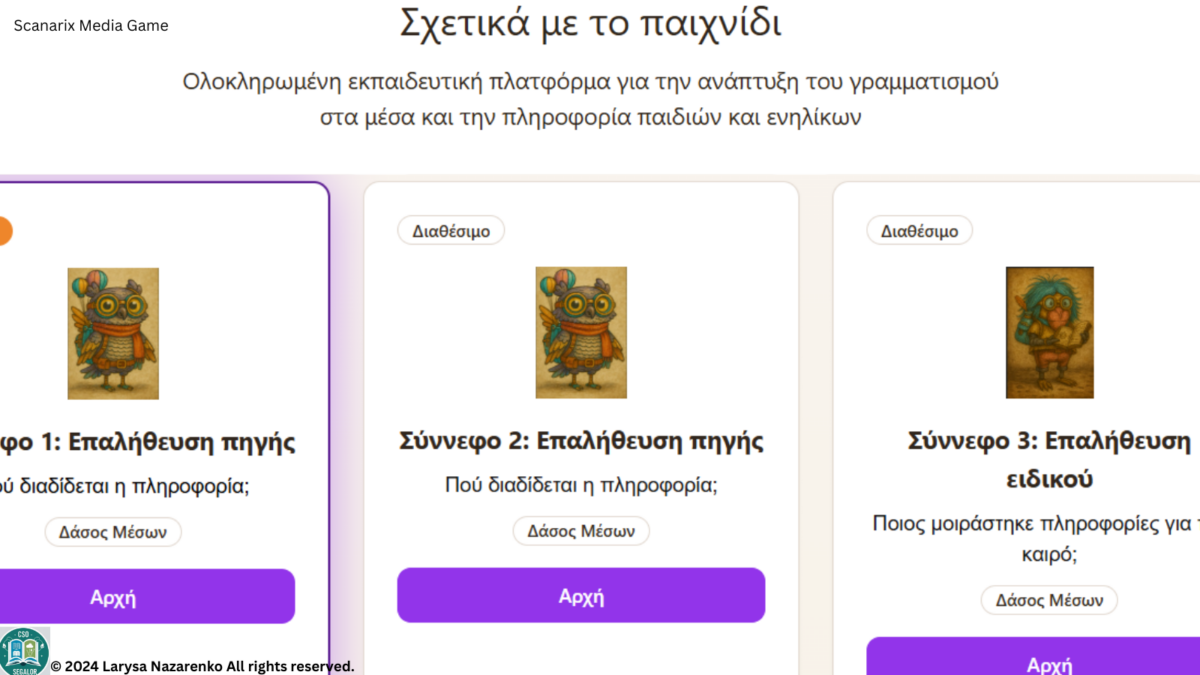
foster critical MIL awareness. It is available as both an offline quest-based game with board game elements and a web-based interactive game (demo version). Currently in English, Ukrainian, and Greek, Scanarix is designed for inclusive, cross-cultural learning, with more languages on the way.