“The key insight from our work is that socio-psychological factors, not just demographics, determine vulnerability to disinformation,” explains Laurence de Nervaux, Destin Commun’s Executive Director. “Low trust in institutions is a stronger factor driving vulnerability to disinformation than age or education level.”
Research into these socio-psychological factors is at the heart of our project. In recent months, More in Common and Destin Commun have conducted surveys and held focus group discussions in France and the UK to understand how disengaged groups consume information, what sources they trust, and which messengers are well placed to help build media literacy skills and resilience against disinformation.
Three pilot initiatives
Working across France and the UK, we are now using these research insights to develop three pilot initiatives tailored specifically for disengaged groups:
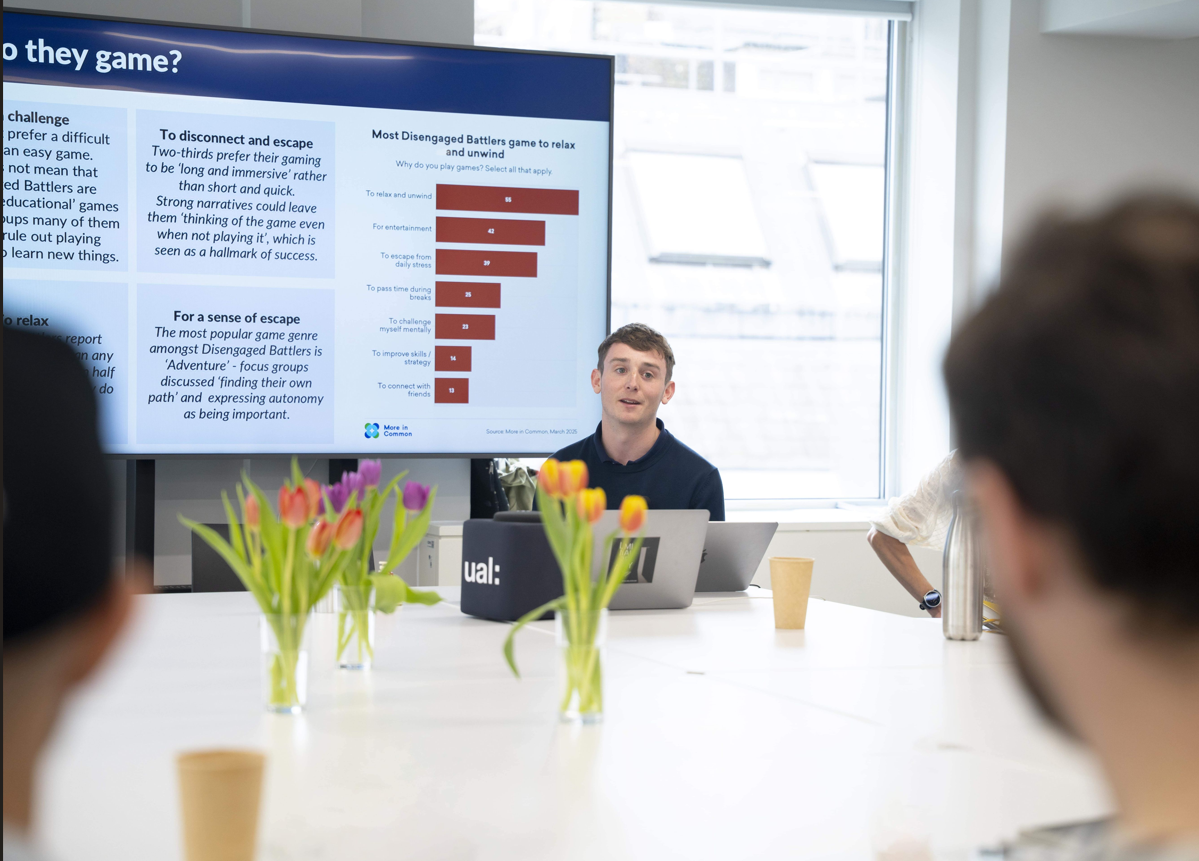
1. Through Games: In the UK, we are working with game designers to explore how media literacy principles can be integrated into video games. Our research shows that people belonging to the ‘Disengaged Battlers’ segment play video games much more frequently than other population segments. This presents an opportunity to reach audiences through gaming who would typically avoid traditional media literacy initiatives. Rather than creating educational games, we want to use creative storytelling and entertainment to build understanding among disengaged groups of how our information environment, our social networks and our emotions shape which sources we find credible and trustworthy.