by Khanyisile Yanela Twabu, UNISA, South Africa.
When I first explored the depths of educational theory, I never imagined that Artificial Intelligence (AI) would become such a game-changer in how we understand and design learning experiences. Yet here we are; living in a time when AI is not just reshaping the future of work but also radically transforming how students learn and how educators teach.
At the core of my research article is a question that’s both simple and complex: how can we blend timeless educational theories with emerging AI technologies to make learning more meaningful, especially in Open Distance eLearning (ODeL)?
Let’s take a step back. The Cognitive Load Theory (CLT) and Mayer’s Cognitive Theory of Multimedia Learning (CTML) have long guided educators in designing instructional materials. These theories emphasize how our brains process information, highlighting the importance of managing mental effort and combining visuals with text to improve learning. Think of it as respecting your brain’s bandwidth while using multimedia to make things click.
But here’s the twist: while these theories are powerful, they weren’t built with AI in mind.
So, I asked myself: “ what happens when you throw AI into the mix?”
The answer, I discovered, is transformative.
AI brings the superpower of adaptability. It can analyse how a student interacts with content and then tweak that content in real-time. Imagine a virtual tutor who not only knows your name but also knows when you’re struggling, when you’re bored, or when you’re in your zone. That’s not science fiction but what AI-enhanced education is beginning to offer.
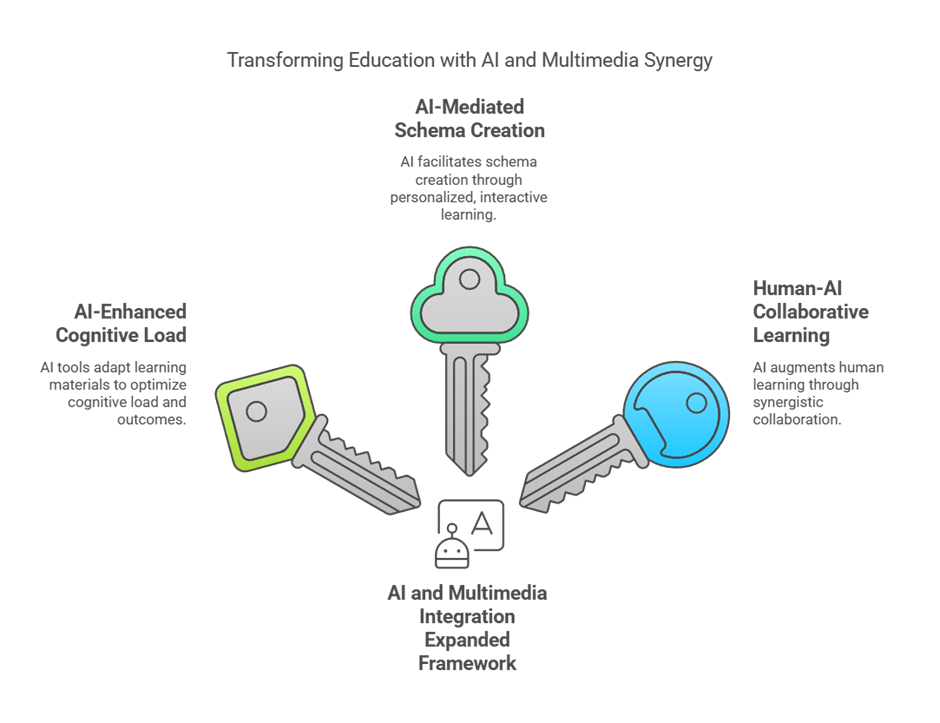
In my doctoral study, I proposed a multimedia framework for teaching and learning in Open Distance eLearning in South Africa. With AI having taken over, this article seeks to develop a new framework that blends AI with CLT and CTML principles. Here’s what it looks like in action:
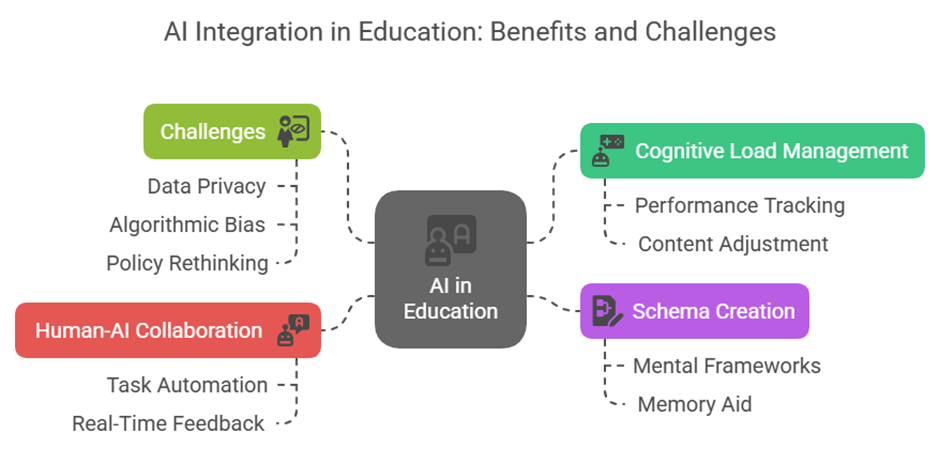
- AI-enhanced Cognitive Load Management: We all know how overwhelming learning can be especially online. AI tools can track a learner’s performance and adjust the difficulty or pacing of content to prevent overload and frustration. This personalisation means students stay in that sweet spot of learning, not too easy, not too hard.
- AI-Mediated Schema Creation: ever noticed how some students “just get it” when the content is tailored to their learning style? AI can do that. By understanding how different learners think and process information, AI-powered systems can help build mental frameworks (schemas) that aid memory and understanding.
- Human-AI Collaborative Learning: rather than replacing educators, AI should become a co-pilot. Think of it as a teaching assistant that can handle repetitive tasks like grading while offering real-time feedback to learners, freeing up teachers to focus on mentoring and deeper interactions.