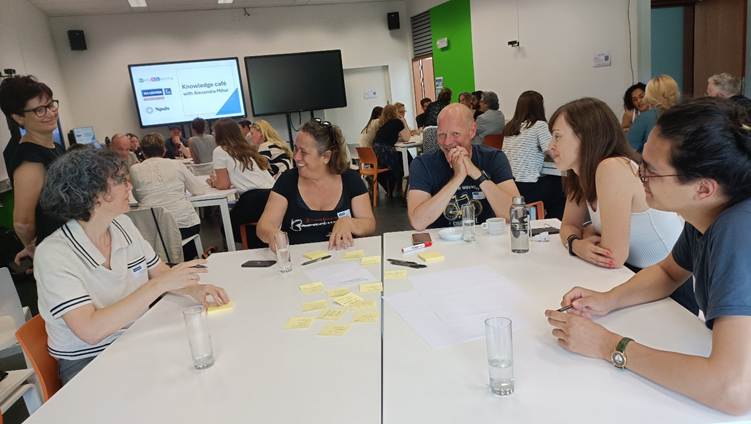
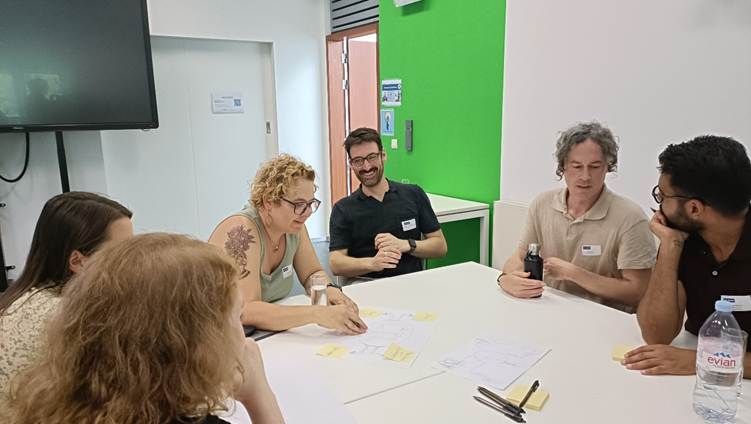
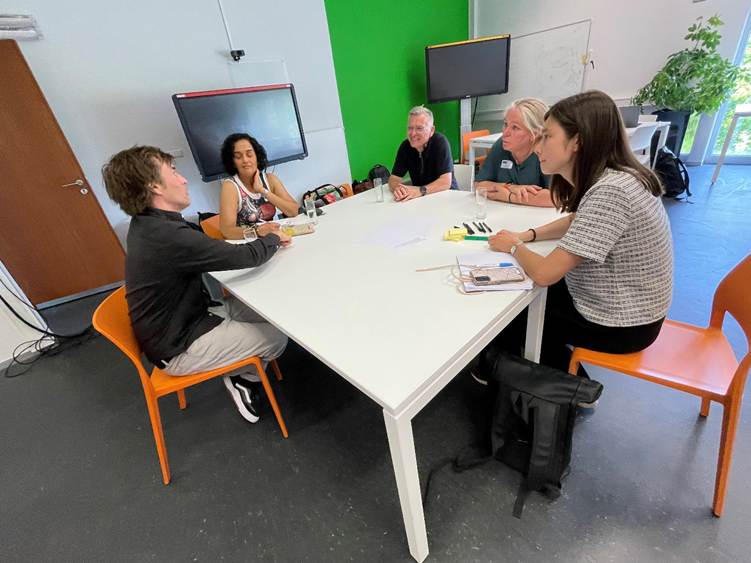
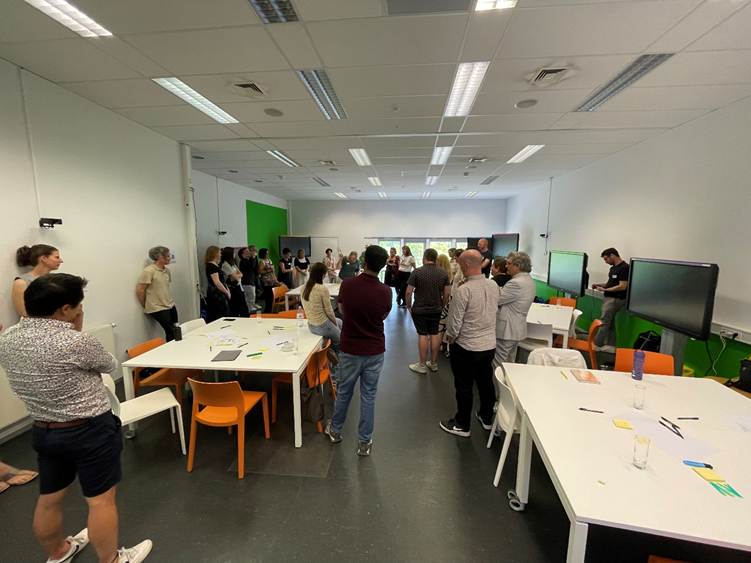
The workshop ended with a knowledge café, facilitated by Alexandra Mihai from Maastricht University (the Netherlands). Everyone first rotated to different discussion tables, after which table hosts recapped the takeaways on each topic.
These included that CTLs see it as their central mission to improve teaching, engagement and learning, acting as agents, negotiators and testers of change and innovation. But also as networkers, strengthening ties and instilling ownership within faculties. Often in creative ways…
Participants also identified advantages linked to different organisational approaches. These included the consistent learning-experience support that central CTLs can offer, the direct interaction with faculties achievable by decentralised CTLs, and the blending and fluid transfer between the two approaches that hybrid CTLs can leverage.
CTL visibility, it was agreed, can be enhanced in many ways. Passively, of course, through tutorials, shareable QR codes, websites, newsletters, promo swag, etc. But also actively. By offering time and energy in the form of training and informal advising. By truly claiming the CTL’s role in building university teaching qualifications, which keeps teachers engaged with a clear visualisation of their progress. Through involvement in curriculum review processes, external audits and rectorate promotions. By bringing teaching support desk staff into CTL activities, so they can help spread the word. And by building strategic relationships with student unions and other (international) partners.
A final takeaway was the necessity of a good culture fit. CTLs need resilient individuals, willing to innovate and open to building relationships and multidisciplinary collaboration. To overcome ever-changing challenges, to evolve and to keep universities thriving for years to come.