Game-based activities created by MDF enable educators to integrate interdisciplinary learning into formal education while fostering media literacy skills across a variety of subjects.
Teaching history through media literacy
Integration of media literacy competences into formal education is crucial in order to build a resilient society from early ages and develop essential skills for accessing, analysing and reflecting on media content. To support this, MDF has developed materials that help educators incorporate media literacy across different subjects.
History has been widely used to fuel propaganda, influencing the attitudes of society. The Georgian case demonstrates how manipulating historical topics successfully sways public opinion, especially with regard to anti-Western narratives. Therefore, teaching history through media literacy ensures that citizens are equipped with historical knowledge but also with a skillset to critically analyse any piece of information.
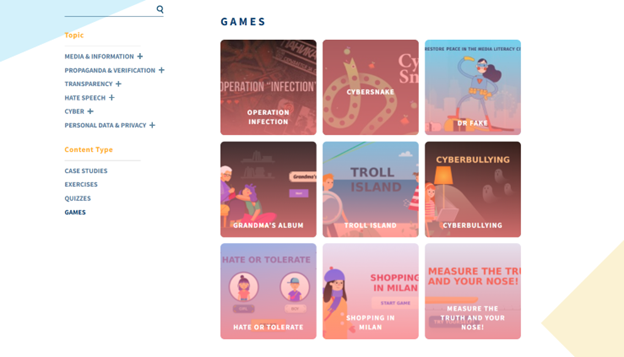
“Operation Infection” is an educational game that immerses players in Soviet active measures, offering a compelling look into historical propaganda tactics. The players assume the role of a KGB agent tasked with orchestrating a large-scale disinformation campaign against the United States. Through this experience, players discover the strategies, stories, and psychological tactics that were key to Soviet propaganda efforts during the Cold War era. The game is both engaging and effective as a teaching tool, as a simulation of real-world disinformation techniques allows players to gain a more nuanced understanding of propaganda and disinformation.
In recognition of its innovative approach, “Operation Infection” won the “Most Creative Format ” award at the Global Fact 11 fact-checking conference.
Another online game, “Grandma’s Album”, invites players to identify locations by observing visual details and to learn the stories behind the places shown in historical photos related to the soviet occupation. Accompanied by audio narratives, sharing the history of each location, the game offers an interdisciplinary experience that develops both geolocation skills and historical knowledge.
Critical clicks: identifying disinformation and trolls
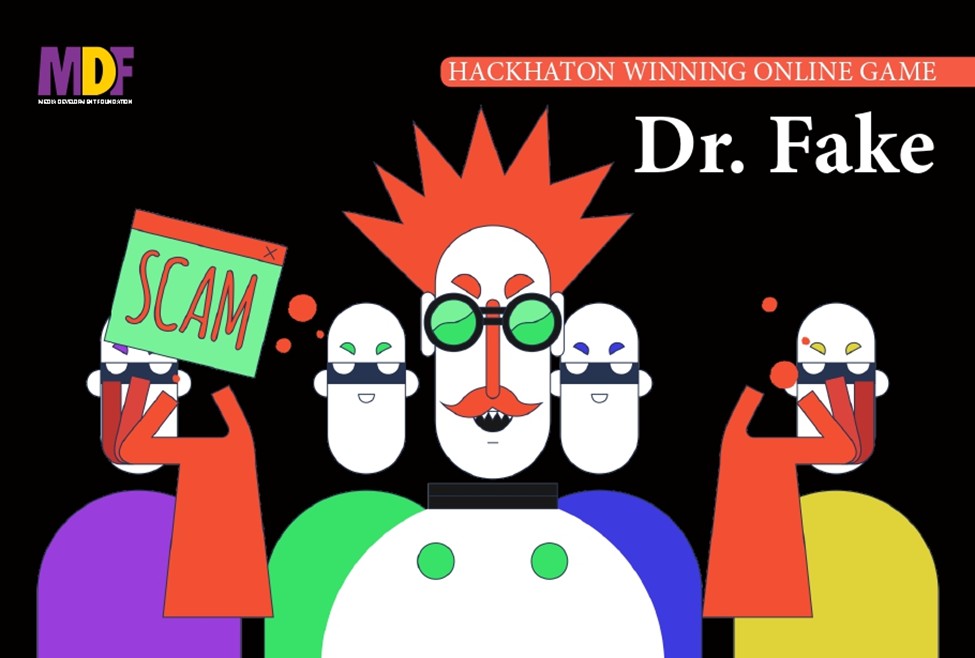
While surfing online, we often face disinformation and trolls and need skills to recognise and deal with them. Enter “Dr. Fake” – an online game where players must save Media Literacy City from Dr. Fake by confronting four of his companions: Mr. Deepfake, Mr. Troll, Mr. Clone and Mr. Phisher and answer their questions correctly. The game is developed by graduates of the MDF’s media literacy program during MDF’s first international hackathon – Hacking the Fake News.