Inclusive course design aims to apply the principles of Universal Design for Learning (see https://udlguidelines.cast.org/), finding ways of diversifying the curriculum and making course materials more accessible.
Rina and Iain explained the importance of diversifying course materials. It concerns student representation and engagement; students feel more included when their group is represented in the curriculum. There is also the aspect of integrated knowledge and student employability; students will meet people from all kinds of different groups in their future work, so by developing their critical thinking and by learning what they need to know, they will be better prepared.
The Inclusive Teacher invites teachers to look at their own course materials through the prism of diversity to find out what they can or cannot do themselves to diversify their course. For example, including a diversity statement in the beginning of your course is a good start. So is asking your students what they need, what perspective they see is missing, or what they can help with. Also, talking to your colleagues to exchange tips regarding inclusive teaching is helpful.
The team also developed Digital accessibility, a guide containing general guidelines for digital content. The content stretches from layout, language, text structure, contextualising information, and hyperlinks to visuals and the use of colours, all to make digital content more inclusive for everyone.
Tip: For access to The Inclusive Teacher, request a guest account at inclusiveteacher@rug.nl
GenAI’s impact on inclusive learning
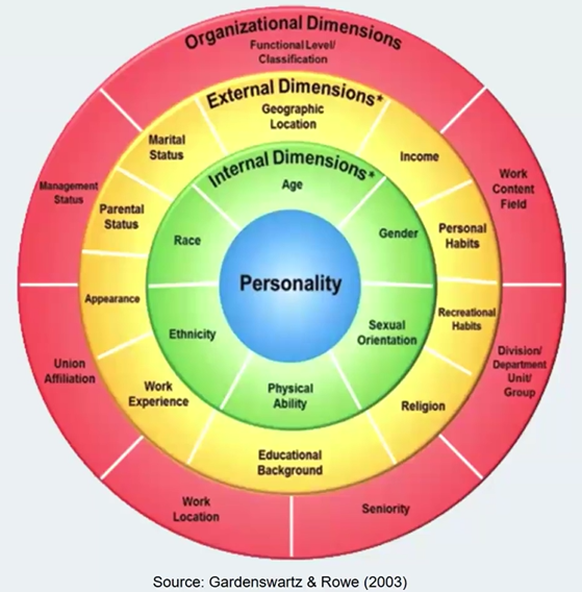
Rachel’s starting point was an overview of many reasons for which students can face a barrier to learning. We as teachers cannot attempt to remove all barriers, but to develop an inclusive community, we need to discuss issues of (in)equality and address them visibly. Students need to feel empowered to be themselves and to be in our classes.
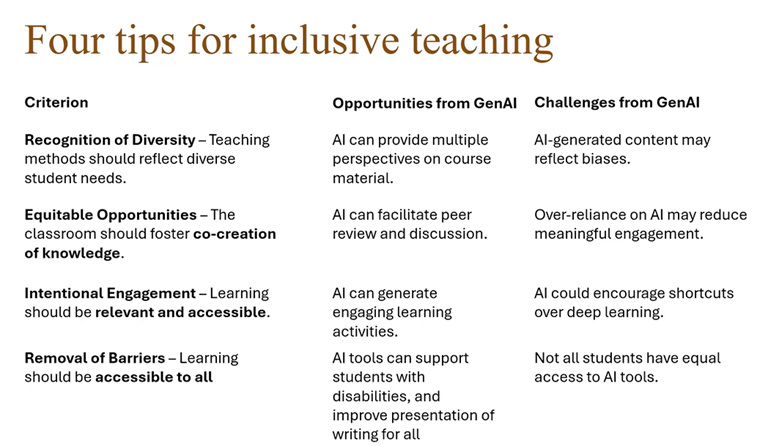
Four useful tips for inclusive teaching: 1. Recognise diversity by using teaching methods that reflect diverse student needs. 2. Equitable opportunities: the classroom should foster co-creation of knowledge. This works best when there’s trust between students and their teachers. 3. Learning should be relevant and accessible, so use intentional engagement. 4. By removing barriers to learning, one at the time, learning will be made accessible to all.
GenAI can be used to help you with these tips for inclusive teaching. However, you should be aware that the use of GenAI comes with challenges. Rachel lists the four teaching tips, the opportunities from GenAI, and its challenges: