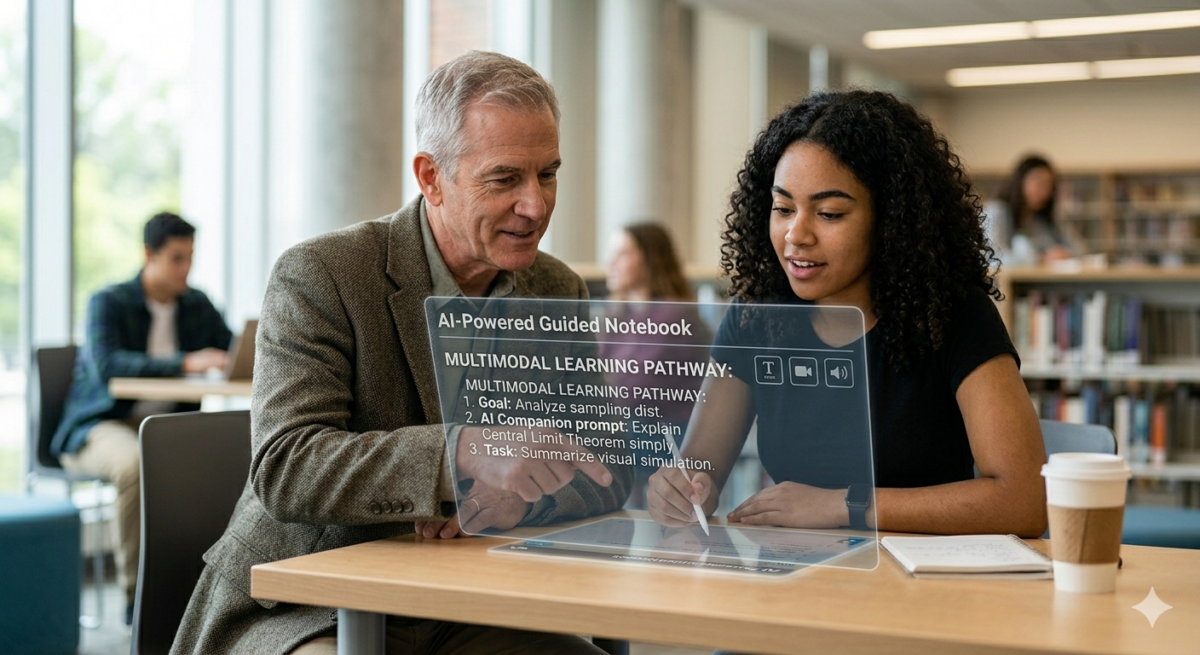
Alongside this, tools like AI powered notebook environments give learners more control over how they organise resources, connect ideas, and ask deeper questions. Here the role of the educator shifts. I no longer see myself primarily as a content deliverer, but as a learning architect. My job is to design the space, the personas, and the constraints within which students and AI can interact in a way that supports genuine learning rather than shortcuts.
Assessment Driven Learning
If assessment drives learning, then we also have to rethink the way we assess. Traditional exams often reward short term memorisation and fast recall under pressure. They rarely resemble the kind of thoughtful, iterative problem solving we want graduates to be capable of in real life. In my keynote, I will show how authentic, multimedia rich assessment can function as elearning in itself.
Consider scenario based quizzes that incorporate images, audio, or video, or interactive tasks in which students explore data, make decisions, and see the consequences of their choices. Think of assignments where students create media, such as a short video, an infographic, or a narrated walkthrough, to demonstrate understanding. These forms of assessment remain tightly connected to clear learning goals, but they also promote critical thinking and self-regulated learning. Students must plan their work, monitor their progress, and reflect on their approach. Those are skills they will need long after they leave our institutions.
For educational designers, this creates a demanding but exciting design challenge. How do we create rich multimedia experiences without overwhelming learners. We need clear structure, meaningful and timely feedback, and a sensible balance between challenge and complexity. When we get this right, assessment is no longer just a measurement tool. It becomes a powerful part of the learning journey.
Open Educational Resources
As we embrace new media and artificial intelligence, we must ask whether we are building tools and content that can be reused, remixed, and improved over time. Are we empowering teachers and students to contribute, or are we locking them into closed systems that are difficult to adapt.
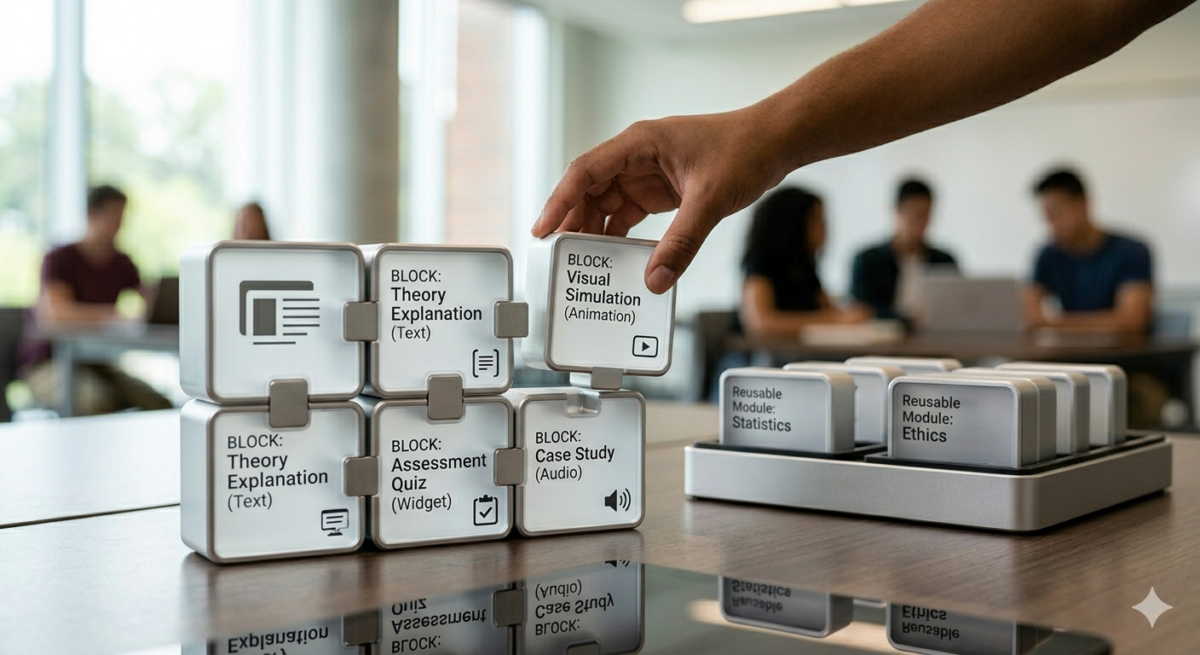
I often describe my preferred approach as the Lego approach. We design small, robust building blocks: activities, media elements, assessment items. These blocks can be combined in many different ways for different courses and contexts. Open educational resources play a key role here. When we share not only content, but also design patterns and examples, innovation stops being an isolated effort by a few enthusiasts and becomes a shared project. The sum can genuinely be greater than the parts if we design for openness and reuse from the beginning.